Framework Components

Comprehensive resources on the building blocks of effective employee development systems

Understanding Development Infrastructure

Effective employee development requires interconnected systems that work together to support growth. The platform approach recognizes that performance reviews, competency frameworks, career maps, and mentorship programmes are not standalone initiatives but components of an integrated development ecosystem.

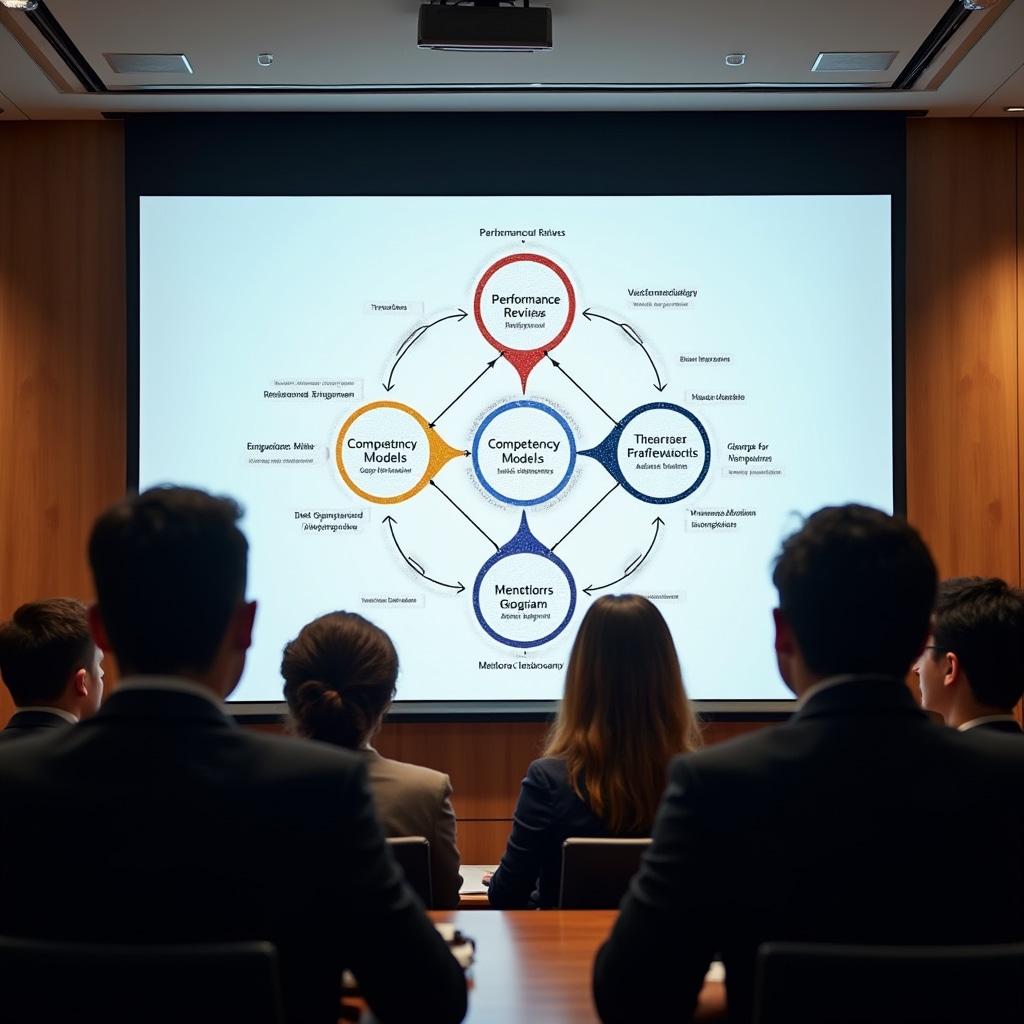
Each component serves specific functions while reinforcing the others. Performance reviews identify current capabilities and growth areas. Competency models define what excellence looks like at each level. Career frameworks show how competencies translate into progression. Mentorship provides guided support through development journeys.


Visual representation of interconnected development framework components

Performance Review Systems

Methodologies for evaluating, documenting, and supporting employee performance

Continuous Feedback Architecture

Continuous feedback systems replace annual or bi-annual reviews with ongoing performance conversations. This architecture includes regular one-on-one meetings, project retrospectives, peer feedback mechanisms, and real-time recognition systems.

Implementation requires establishing feedback rhythms (weekly, bi-weekly, or monthly check-ins), training managers in coaching conversations, creating lightweight documentation systems that capture insights without bureaucratic overhead, and building a culture where feedback is normalized rather than threatening.

Technology platforms can support continuous feedback through structured check-in templates, feedback request workflows, and aggregation of input over time. However, the technology serves the conversation rather than replacing human interaction.

Check-In Structure

  • Progress on current priorities
  • Obstacles and support needs
  • Wins and learning moments
  • Upcoming focus areas

Feedback Capture

  • Specific behavioral observations
  • Impact on outcomes or team
  • Reinforcement or adjustment suggestions
  • Development opportunities identified

360-Degree Assessment Design

360-degree reviews gather perspectives from multiple sources to create comprehensive performance pictures. Effective design balances thoroughness with participant burden, typically including self-assessment, manager evaluation, peer input, and for people managers, upward feedback from direct reports.

Question design focuses on observable behaviors rather than personality traits, uses specific competency language aligned with organizational frameworks, and includes both rating scales and open-ended commentary. The number of raters matters—too few provides insufficient perspective, too many creates survey fatigue.

Processing 360 feedback requires careful facilitation. Raw data needs interpretation to identify patterns versus outliers, and delivery should emphasize development opportunities rather than creating defensiveness. Many organizations separate 360 feedback from compensation decisions to encourage honest input.

Calibration Process

Calibration sessions bring managers together to discuss their performance assessments and ensure consistency in how criteria are applied. This process addresses the reality that different managers may interpret performance standards differently or have varying levels of rating stringency.

Effective calibration involves managers presenting their assessments with supporting evidence, peer managers asking clarifying questions, discussion of borderline cases, and adjustment of ratings where inconsistencies are identified. The goal is not forced distribution but shared understanding of what different performance levels look like.

Calibration also serves as manager development, helping leaders understand how their peers evaluate performance and exposing them to different examples of competency demonstration. Over time, calibration creates more aligned assessment practices across the organization.

Competency Assessment Models

Frameworks for defining, measuring, and developing organizational capabilities

Competency Architecture

Competency frameworks typically organize capabilities into categories: technical competencies specific to job families, leadership competencies that apply across management roles, and core competencies expected of all employees regardless of level or function.

Each competency includes a definition, behavioral indicators at different proficiency levels, and examples of how the competency manifests in work. Well-designed competencies are observable (can be seen in behavior), measurable (can be assessed), and actionable (can be developed).

Example competency matrix showing progression levels

Proficiency Levels

Most competency models use three to five proficiency levels to describe progression from foundational to expert capability. Common frameworks include: developing (learning the competency), proficient (independently demonstrating), advanced (mentoring others), and expert (shaping organizational practice).

Level definitions describe what demonstration looks like at each stage. For example, a communication competency might progress from "clearly conveys information to immediate team" at proficient level to "tailors complex messages for diverse stakeholder audiences and builds organizational alignment" at advanced level.

Assessment Methods

Competency assessment combines multiple data sources for accuracy. Manager observation provides ongoing perspective on how competencies appear in daily work. Self-assessment reveals employee awareness of their capabilities. Peer feedback offers lateral perspective on collaboration and influence competencies.

Some organizations use structured assessment tools like behavioral interviews, work samples, simulations, or assessment centers for high-stakes decisions like promotions into leadership roles. These tools provide standardized comparison points but require significant resource investment.

Gap Analysis

Competency assessment identifies gaps between current capability and target level for the employee's role or aspired next role. Gap analysis informs individual development planning by highlighting priority areas for growth.

Effective gap analysis distinguishes between critical gaps (competencies essential for current role success), development gaps (competencies needed for career progression), and stretch gaps (competencies that would expand contribution). This prioritization helps focus limited development time and resources.

Mentorship Programme Design

Principles for creating structured mentorship systems that accelerate development

Mentorship programmes formalize developmental relationships between experienced employees (mentors) and those seeking to grow specific capabilities (mentees). Well-designed programmes provide structure while allowing flexibility for relationships to develop organically within that framework.

01

Clear Programme Objectives

Effective mentorship programmes define specific goals: developing leadership capabilities, supporting career transitions, building technical expertise, or increasing retention of high-potential employees. Clear objectives guide programme design decisions including mentor selection criteria, matching approaches, and success metrics.

Objectives should align with broader organizational talent strategies. If the organization prioritizes internal mobility, mentorship might focus on helping employees understand different career paths. If leadership pipeline development is the priority, mentorship might target high-potential individual contributors preparing for management roles.

02

Thoughtful Matching Process

Mentor-mentee matching significantly impacts relationship success. Some programmes use algorithmic matching based on development goals, personality assessments, and availability. Others allow mentees to select from a pool of available mentors. Hybrid approaches offer shortlists based on matching criteria with final selection by the mentee.

Matching considerations include complementary expertise (mentor has capabilities mentee wants to develop), compatible communication styles, sufficient organizational distance (avoiding direct reporting relationships), and practical factors like time zone and schedule alignment for remote relationships.

03

Structured Relationship Framework

While mentorship relationships should feel organic, structure prevents drift. Frameworks typically include defined programme duration (often 6-12 months), expected meeting frequency (monthly or bi-monthly), and suggested discussion topics or activities.

Initial relationship setup is critical. Programmes should guide mentor-mentee pairs through establishing ground rules, defining specific mentee development goals, discussing preferred communication methods, and setting expectations around confidentiality and feedback.

04

Mentor Preparation

Being an effective mentor requires skills that even experienced employees may not naturally possess. Mentor training covers active listening techniques, asking powerful questions rather than prescribing solutions, providing constructive feedback, recognizing when to share experiences versus when to let mentees work through challenges, and understanding boundaries of the mentorship role.

Ongoing mentor support through peer learning groups or mentor coordinators helps mentors navigate challenging situations and share effective practices. Recognition of mentor contributions—through acknowledgment in performance reviews or leadership visibility—reinforces the value placed on mentorship.

05

Progress Tracking and Evolution

Mentorship programmes benefit from light-touch progress monitoring. Check-ins at programme milestones (30, 60, 90 days) help identify relationships that need support and capture early learnings. End-of-programme surveys from both mentors and mentees provide data for continuous improvement.

Some mentorship relationships naturally extend beyond formal programme timeframes, which should be supported rather than discouraged. The programme structure serves as a catalyst for relationships that may continue informally as part of the employee's ongoing professional network.

Framework Integration

How development components work together as a cohesive system

The power of development frameworks emerges from integration rather than isolated components. Performance reviews identify competency levels. Competency gaps inform individual development plans. Career frameworks show how competency development translates into progression. Mentorship provides guidance through the development journey.

Integration requires consistent language across components. When performance reviews, competency models, career frameworks, and development conversations all reference the same capabilities, employees can connect feedback to growth actions to career outcomes.

Technology can support integration by housing all development information in connected systems, but integration is fundamentally about aligned processes and shared understanding among managers and employees about how development works.

Diagram showing interconnections between framework components